
Understand the source of the concern.
Dr. Landmann evaluates eyelid position, skin, fat, facial support, eye-surface health, prior procedures, medications, and goals.
Upper eyelid surgery
Learn how carefully planned upper-eyelid surgery can address hooding and excess skin while preserving the features that make you look like yourself.
Request a consultation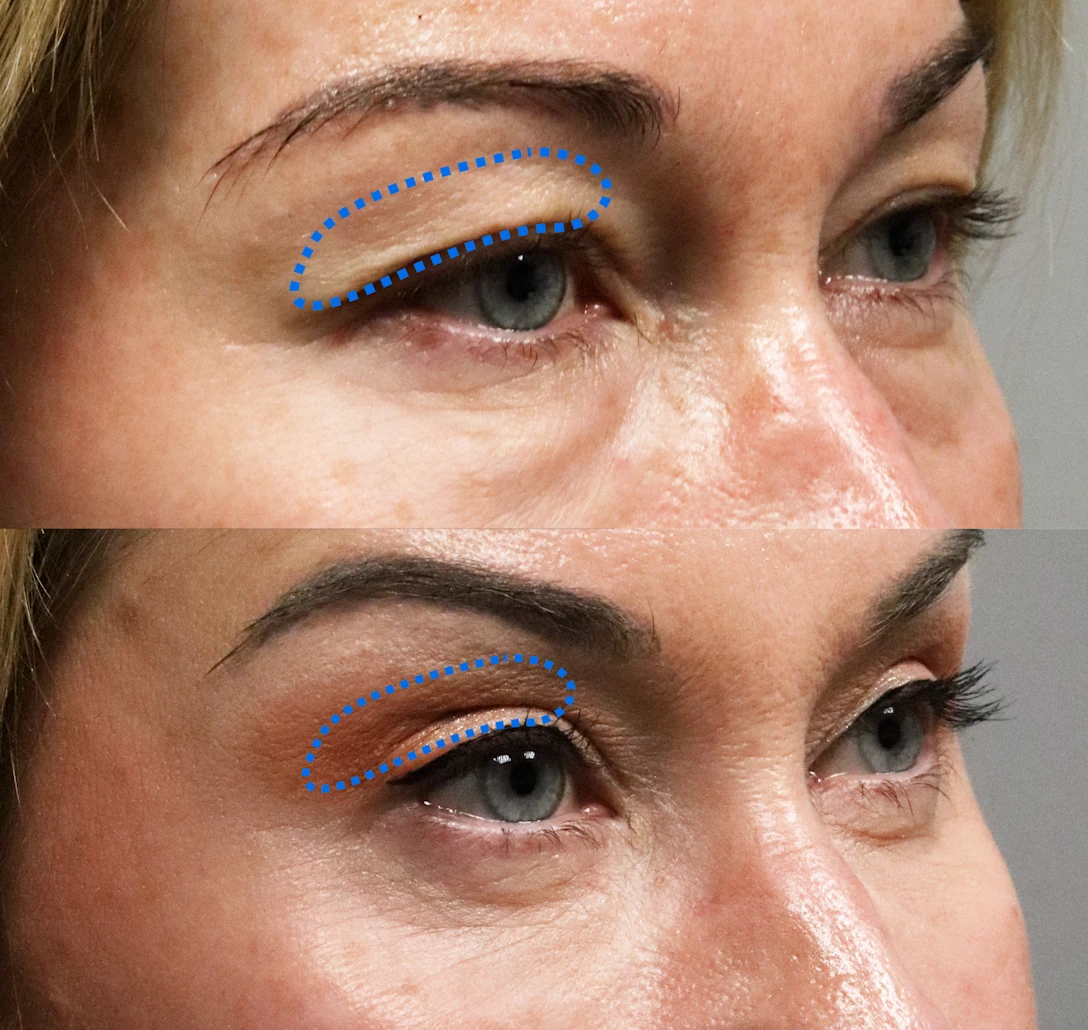
What it treats
An individual examination reviews eye health, anatomy, prior procedures, medications, goals, risks, benefits, alternatives, and realistic recovery before a treatment is recommended.
A patient-first overview
Dr. Landmann evaluates eyelid position, skin, fat, facial support, eye-surface health, prior procedures, medications, and goals.
Technique, treatment setting, comfort plan, expected changes, and alternatives are discussed before treatment.
The team provides personalized preparation and postoperative guidance and monitors healing, comfort, and eyelid function.
The goal is a natural-looking result planned around your anatomy—not a different face.
Dr. Landmann evaluates upper-lid skin, the height and contour of each eyelid, eyebrow position, eye-surface health, prior procedures, medications, and the amount of visible lid platform. This distinguishes dermatochalasis from ptosis and helps identify when both are present.
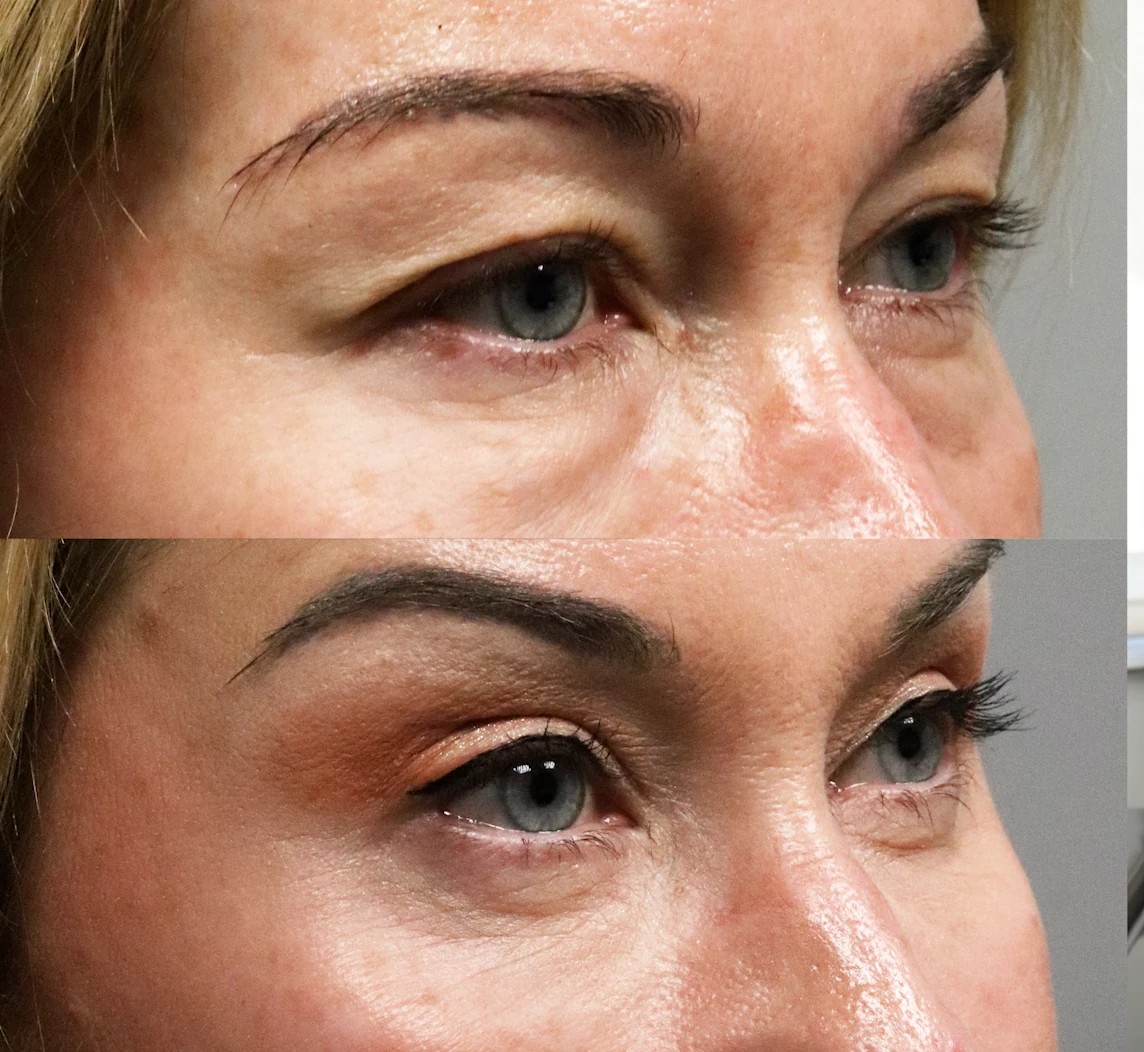
The planned fold and skin-removal pattern are tailored to the patient. When appropriate, selected fullness near the inner eyelid may also be addressed. The plan aims to preserve comfortable closure and a natural eyelid shape.
Many upper-eyelid procedures are performed in the office with local numbing medicine and an oral relaxing medication. The team provides individualized preparation and postoperative instructions, then monitors incision healing, swelling, comfort, and eyelid function.
From consultation to recovery
Review eye health, medications, prior procedures, skin, eyelid height, and goals.
Discuss technique, anesthesia, expected changes, risks, alternatives, and realistic recovery.
Receive individualized instructions and scheduled postoperative checks from the care team.
Before and after
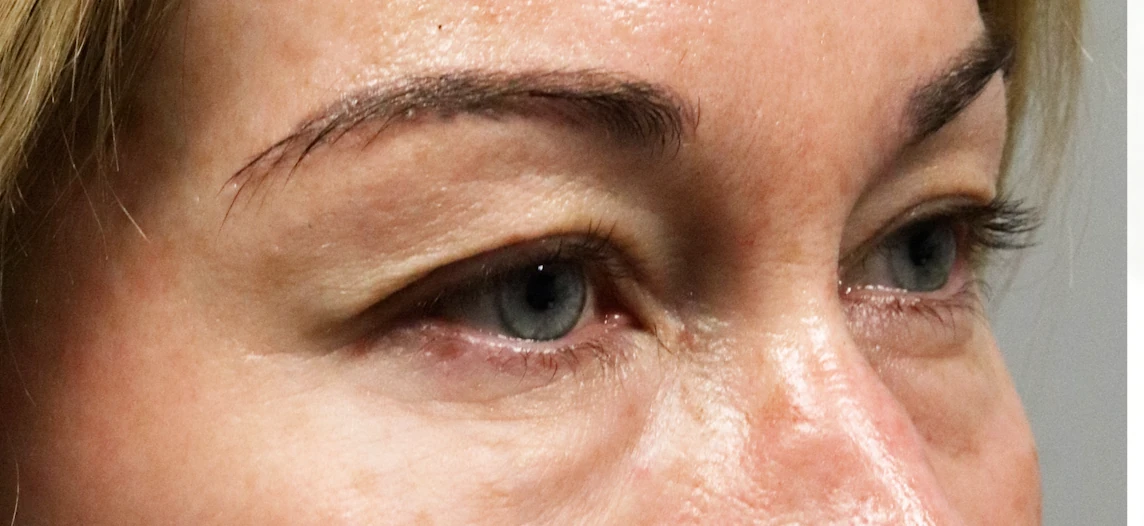
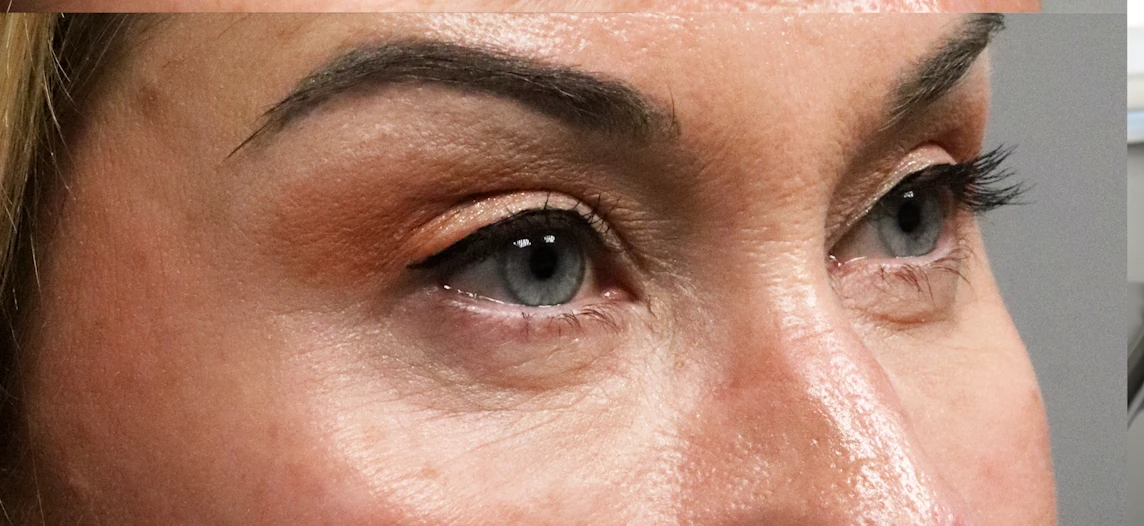
Real patient. Individual results vary. Images are shown for educational purposes with appropriate permission.
Patient experience
Patients often have questions about comfort, recovery, and whether the result will still feel like them. This short testimonial offers a patient’s perspective after eyelid surgery with Dr. Landmann.
Tell us what you are noticing and the team will help you choose the right place to begin.